
Top Industries Using Wood-Based Activated Carbon | Food, Pharma, Biotech & More
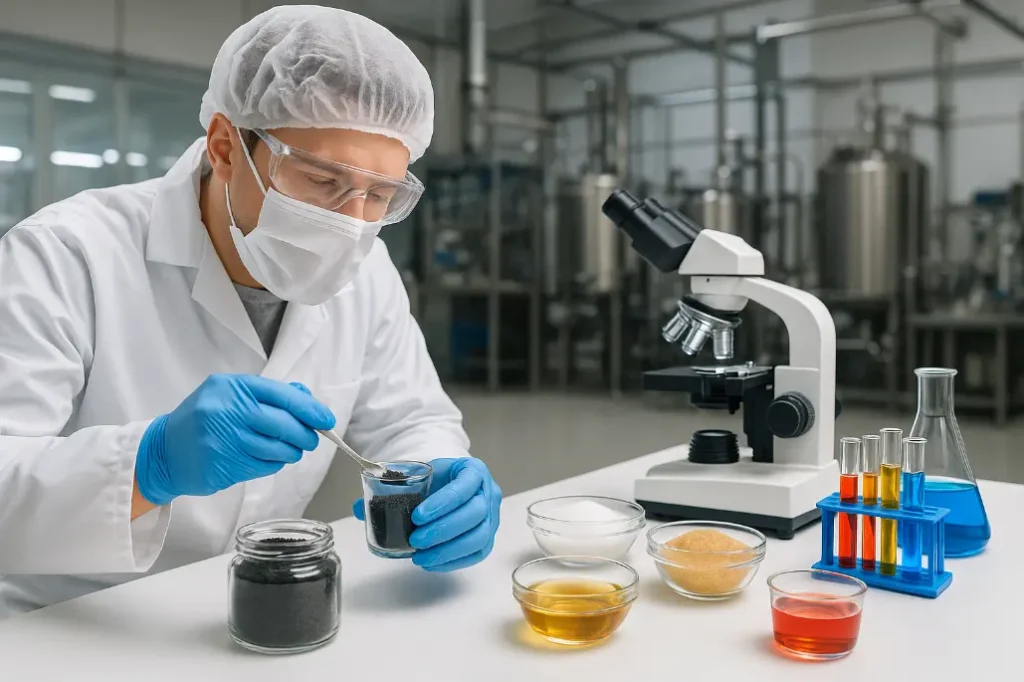
Explore how wood-based activated carbon powers purification processes in food, pharmaceutical, biotechnology, and cosmetic industries, offering eco-friendly, high-efficiency performance.
Best Practices for Storing and Handling Wood Powder Activated Carbon
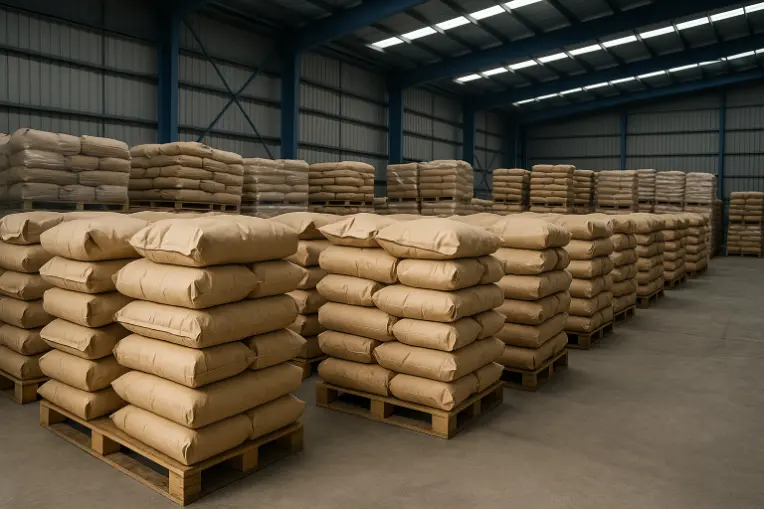
This article explains essential practices for storing and handling wood powder activated carbon. It covers humidity control, contamination prevention, explosion safety, packaging, and FIFO principles to ensure product quality and workplace safety.
Correlation Between Iodine Number and Decolorization Efficiency in Wood Activated Carbon
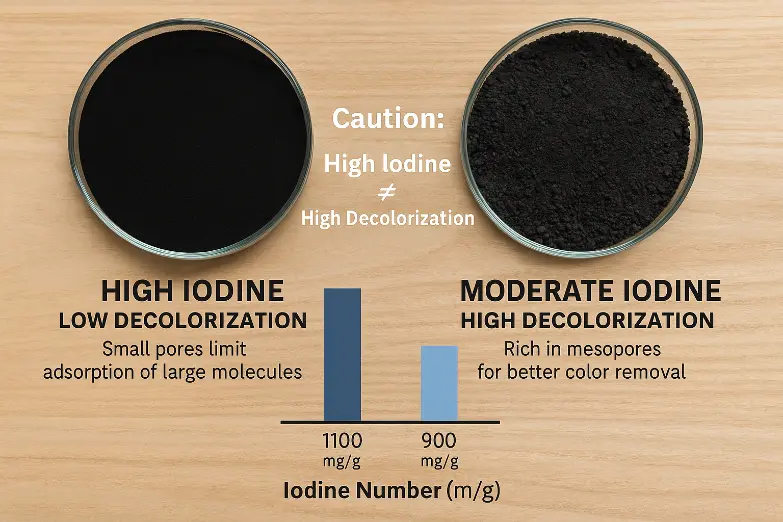
This article explores the relationship between iodine number and decolorization performance in wood-based activated carbon. It explains why iodine number alone is insufficient for evaluating liquid-phase applications and provides guidance on how to select the right carbon for high-efficiency color removal.
Factors Affecting Decolorization Efficiency of Wood Powder Activated Carbon
Wood-based powdered activated carbon plays a vital role in liquid-phase decolorization for industries such as food, pharmaceuticals, and biotech. This article explains how factors like pore structure, particle size, dosage, pH, and contact time influence its decolorization efficiency.
How to Choose the Right Mesh Size of Powdered Activated Carbon (PAC)
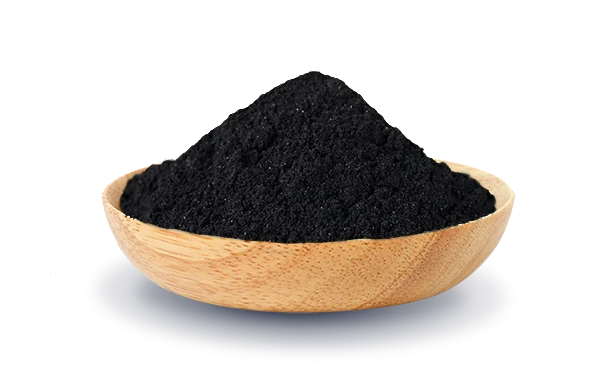
Wood-based powdered activated carbon plays a vital role in industries such as water treatment, food processing, and pharmaceuticals. This article explores how to choose the right type based on application-specific needs like particle size, adsorption capacity, and purity.
Powdered Activated Carbon for Wastewater Treatment: Why Wood-Based Carbon Is a Top Choice
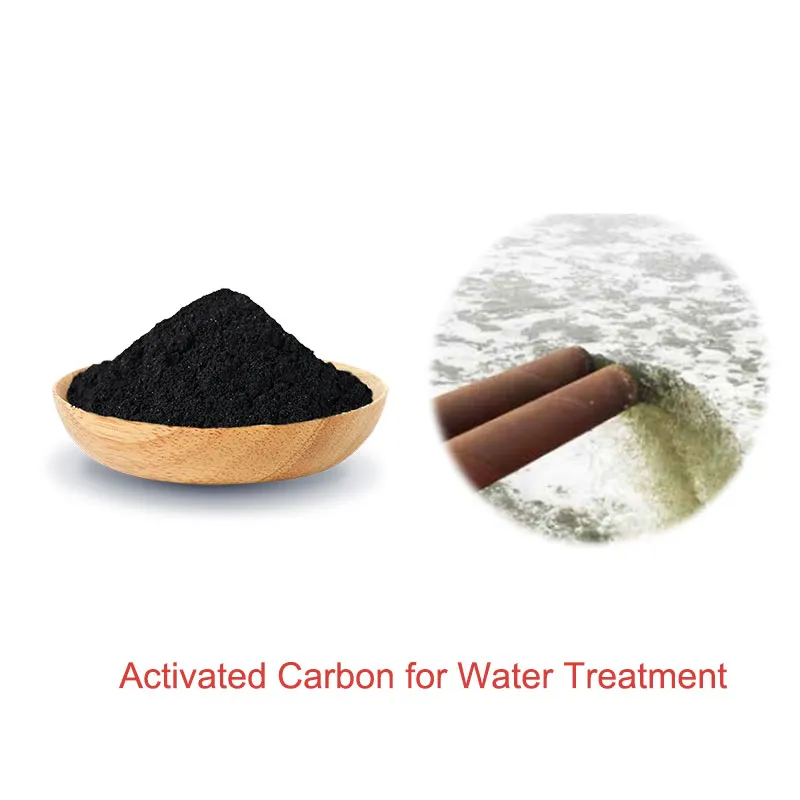
Wood-based powdered activated carbon (PAC) is an effective, eco-friendly solution for wastewater treatment in industries such as textiles, chemicals, and food processing. Compared to coal-based PAC, wood-based carbon offers faster adsorption, lower ash content, and greater compatibility with dye and COD removal applications. This article explores the benefits, usage methods, and typical applications of wood-based PAC for industrial effluent treatment.
Activated Carbon for Lactose Refining
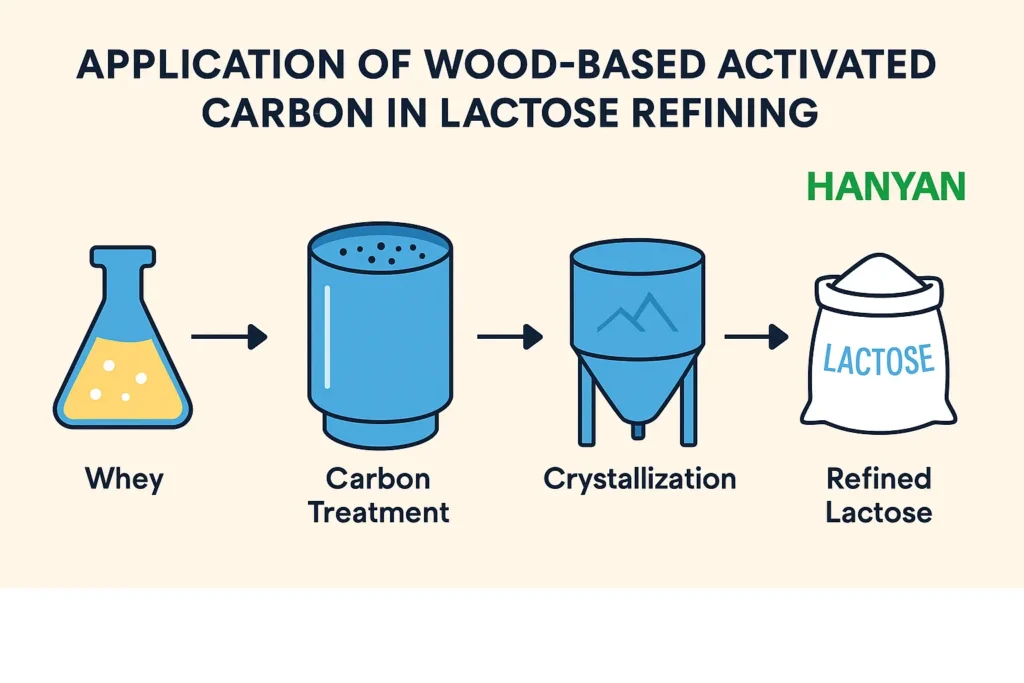
Explore how wood-based activated carbon improves lactose purity, color, and odor removal in dairy processing. Discover HANYAN’s food-grade solutions for pharmaceutical lactose production.
Activated Carbon for Natural Sweetener Processing: Erythritol and Stevia

Wood-based activated carbon plays a vital role in refining natural sweeteners like erythritol and stevia. From removing color pigments to eliminating fermentation odors and off-flavors, it ensures food-grade purity, better crystallization, and improved consumer acceptance. This article explains the purification process, benefits of wood carbon, and best practices for industrial application.
Activated Carbon in Action: Preventing Gel Sublimation

Modified activated carbon effectively prevents sublimation in gel and slurry systems by adsorbing volatile compounds, regulating humidity, and chemically stabilizing formulations. This article explores mechanisms, benefits, and best practices for its use in industrial applications.
Radioactive Wastewater Treatment with Modified Activated Carbon

Modified activated carbon offers an efficient, eco-friendly solution for removing radioactive nuclides from wastewater. This article highlights its synthesis, enhancement techniques, and performance, showcasing its potential in nuclear wastewater treatment.