
Amino acids and fermentation-derived products are widely used in food additives, feed additives, pharmaceutical intermediates, nutraceuticals, and fine chemicals. During fermentation, extraction, concentration, and refining, the liquid may contain color bodies, organic by-products, proteins, pigments, odor compounds, and other trace impurities.
To improve product appearance and quality consistency, decolorization is often required before final concentration, crystallization, drying, or downstream purification. Wood-based powdered activated carbon is commonly used in this stage because of its strong liquid-phase adsorption ability and suitable pore structure for many color and organic impurity molecules.
Why Fermentation Broth Needs Decolorization
Fermentation broth is a complex liquid system. Even after separation or preliminary purification, it may still contain colored substances and residual organic impurities from raw materials, microbial metabolism, nutrients, process aids, and thermal reactions.
In amino acid production, excessive color can affect the appearance of the final product and may also indicate the presence of unwanted by-products. For products used in food, feed, pharmaceutical, or high-purity chemical applications, stable color and purity are important quality requirements.
Activated carbon treatment can help reduce color, improve clarity, and support more consistent downstream processing.
Why Wood-Based Powdered Activated Carbon Is Commonly Used
Wood-based powdered activated carbon is widely used in liquid decolorization applications. Compared with some gas-phase activated carbon grades, wood-based powder carbon often has a pore structure more suitable for adsorbing larger color molecules and complex organic impurities in liquid systems.
Its fine particle size allows it to disperse in the fermentation liquid and contact target impurities efficiently. After adsorption, the spent carbon can be removed through filtration or other solid-liquid separation processes.
For amino acid and fermentation broth decolorization, wood-based powdered activated carbon is often selected for:
- Strong decolorization ability in liquid-phase systems
- Good adsorption of organic impurities and odor compounds
- Suitable pore structure for larger molecules
- Fast contact with the treated liquid
- Flexible particle size options for different filtration systems
- Stable performance for food, feed, pharmaceutical, and chemical processing applications
Common Applications in Fermentation-Based Products
Wood-based powdered activated carbon can be used in the purification of different fermentation-derived products, depending on the process design and quality target.
Typical application areas include:
- Amino acid production
- Lysine, glutamic acid, tryptophan, and other amino acid processing
- Fermentation broth color removal
- Food additive purification
- Feed additive purification
- Organic acid and biochemical intermediate refining
- Nutraceutical and pharmaceutical intermediate purification
The suitable activated carbon grade should be selected according to the actual liquid composition, color level, impurity type, filtration condition, and final product requirement.
Key Factors That Affect Decolorization Performance
1. Type of Color Bodies and Impurities
Different fermentation liquids contain different color and impurity profiles. Some color bodies are easy to remove, while others may require a carbon grade with a more suitable pore-size distribution or higher adsorption performance.
For this reason, a carbon that works well in one fermentation process may not always perform the same way in another. Sample testing is often necessary before full-scale use.
2. Methylene Blue Value and Pore Structure
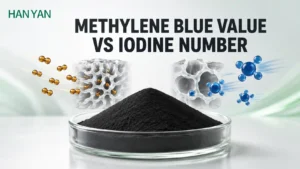
For liquid decolorization, methylene blue value is often used as one reference indicator because it relates to the adsorption of larger molecules. However, it should not be the only factor used for carbon selection.
Actual performance also depends on raw material, pore-size distribution, ash content, pH, particle size, and the composition of the fermentation broth. A suitable wood-based activated carbon should match the target impurities in the specific liquid system.
3. Carbon Dosage and Contact Time
Carbon dosage directly affects decolorization performance and treatment cost. A higher dosage may improve color removal, but it can also increase filtration load and carbon consumption.
Contact time is also important. Insufficient contact may lead to incomplete adsorption, while excessive contact time may reduce production efficiency without adding meaningful improvement.
Laboratory testing can help determine a reasonable balance between color removal, dosage, contact time, and filtration speed.
4. Filtration Performance
After activated carbon adsorbs color bodies and impurities, it must be removed from the liquid. If the carbon contains too many ultrafine particles or forms a dense filter cake, filtration may become slow.
For fermentation broth processing, filtration performance is just as important as decolorization efficiency. Buyers should consider particle size, mesh passing rate, filterability, and compatibility with the existing filtration system.
5. Ash Content and pH
Fermentation-derived products may have strict purity requirements. Ash content, soluble impurities, and pH value can affect downstream processing and final product quality.
For sensitive applications, buyers should confirm whether the activated carbon grade meets the required ash, moisture, pH, and impurity-control standards.
Why Effective Component Loss Should Be Considered
In amino acid and fermentation broth purification, activated carbon should remove unwanted color and impurities without causing excessive loss of the target product.
If the carbon dosage is too high or the selected carbon has unsuitable adsorption behavior, it may adsorb part of the valuable product together with impurities. This can reduce yield and increase overall production cost.
Therefore, the best activated carbon is not always the one with the strongest adsorption value. It should provide a practical balance between decolorization efficiency, selectivity, filtration performance, and product yield.
What Buyers Should Confirm Before Selecting a Carbon Grade
To recommend a suitable wood-based powdered activated carbon, the following information is useful:
- Type of fermentation product or amino acid
- Current color level and target color reduction
- Liquid pH, temperature, and concentration
- Existing carbon dosage and contact time
- Required methylene blue value or other adsorption indicators
- Particle size or mesh requirement
- Ash, moisture, and pH requirements
- Filtration equipment and filter-aid conditions
- Whether product yield or active component loss is a concern
With this information, suppliers can recommend a carbon grade based on real process needs rather than only a general specification.
HANYAN Wood-Based Powdered Activated Carbon Support
HANYAN supplies wood-based powdered activated carbon for liquid-phase decolorization and purification applications, including fermentation broth, amino acids, organic acids, food additives, pharmaceutical intermediates, and fine chemicals.
For customers developing or optimizing a decolorization process, we can support specification confirmation, sample evaluation, particle-size discussion, and product recommendation based on the actual liquid system.
If your current process has problems such as insufficient color removal, high carbon dosage, slow filtration, unstable batch performance, or excessive product loss, sharing your process conditions can help us recommend a more suitable wood-based powdered activated carbon grade.
Conclusion
Wood-based powdered activated carbon is a practical adsorbent for amino acid and fermentation broth decolorization. It can help remove color bodies, organic impurities, and odor compounds while supporting cleaner downstream processing.
However, successful application depends on more than adsorption capacity alone. Pore structure, methylene blue value, particle size, carbon dosage, contact time, filtration behavior, ash content, pH, and product yield should all be considered together.
By selecting a suitable wood-based powdered activated carbon grade and verifying performance through testing, producers can improve decolorization efficiency, maintain product quality, and reduce unnecessary treatment cost.
Article Keywords: wood-based powdered activated carbon, activated carbon for fermentation broth decolorization, activated carbon for amino acid purification, powdered activated carbon for decolorization, wood activated carbon for liquid purification, fermentation broth purification, amino acid decolorization carbon