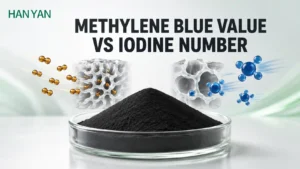

In last article, we examined the key indicators of sugar-grade activated carbon – Molasses Value, Methylene Blue, and Iodine Number. However, numbers alone do not determine suitability.
Activated carbon performance only becomes meaningful when evaluated within a specific sugar type, processing condition, and filtration system design. There is no universal “best” sugar carbon – only the most appropriate carbon for a given application.
1) Different Sugars, Different Adsorption Logic
Although many sugar solutions appear similar, their impurity profiles can differ significantly. That difference changes what “good performance” really means.
| Sugar Type | Typical Impurity Characteristics | Performance Priority |
|---|---|---|
| Cane Sugar (Sucrose) | High-molecular caramel pigments; larger color bodies | Strong mesopore capacity (high Molasses Value) |
| Glucose Syrup | Colloidal color bodies; process-dependent organics | Balanced pore distribution and stable operation |
| Erythritol | Fine residual organics; purity-sensitive systems | Low ash, clean structure, and consistent purity |
| Stevia Extract | Complex plant pigments; often higher viscosity | Kinetics and larger pore accessibility |
For example, traditional cane sugar refining often emphasizes Molasses Value because larger pigment molecules dominate. In contrast, erythritol purification may prioritize low ash and structural cleanliness because the process is more sensitive to impurities.
2) System Conditions Matter More Than Isolated Numbers
Even for the same sugar type, performance priorities shift with operating conditions such as:
- Contact time
- Temperature
- pH level
- Filtration mode (batch vs. continuous)
- Carbon dosage strategy and replacement cycle
In short-contact continuous systems, adsorption kinetics can matter more than ultimate capacity. In batch decolorization tanks, total adsorption volume may become more relevant. In purity-driven production, ash control and stability often outweigh headline indicator values.
3) When High Iodine Value Becomes Irrelevant
Many buyers assume a higher iodine number always means a better carbon. In sugar processing, that is often not true.
Iodine value mainly reflects micropore content. However, many sugar pigments are better addressed by mesopores. A very high iodine value may indicate excessive microporosity that does not materially improve decolorization for larger color bodies.
What matters most is whether the pore size distribution matches the molecular size of the target impurities.
4) Performance Is a Design Outcome
Sugar-grade activated carbon is not a commodity material – it is a process-matched solution. Effective selection typically considers:
- Pore size distribution (micro/meso/macro balance)
- Mechanical stability
- Ash and soluble impurities
- Surface chemistry and adsorption behavior
- Stability under regeneration (when applicable)
At HANYAN, we focus on application-oriented development – engineering carbon structures tailored to specific sugar industries rather than pursuing isolated laboratory indicators. Because in real systems, performance is defined by compatibility and consistency, not a single number.
Conclusion: From Indicator Thinking to Process Thinking
Part 3 explained what the indicators mean. Part 4 shows how to use them correctly.
In sugar processing, the right carbon is not the one with the highest value – it is the one whose structure, chemistry, and stability align with the real production environment.
Next (Part 5): We will explore how regeneration performance and lifecycle cost influence long-term carbon selection strategies.
Related Reading
- Part 1: The Evolution of Sugar Decolorization Carbon (From Bone Char to Wood-Based Activated Carbon)
- Part 2: Why Mesopores Matter in Sugar Decolorization
- Part 3: Core Indicators of Sugar Carbon (Molasses Value, Methylene Blue, Iodine Number)
Article Keywords: sugar decolorization activated carbon, sugar carbon indicators, molasses value, methylene blue adsorption, iodine number, mesopore activated carbon, activated carbon for sucrose, activated carbon for glucose syrup, activated carbon for erythritol, activated carbon for stevia extract, application-driven carbon selection